
Why optical security features resist photography
Holograms, OVI and microtext are not decorative effects. They depend on angle, light and the human eye — the very layer a photograph loses.
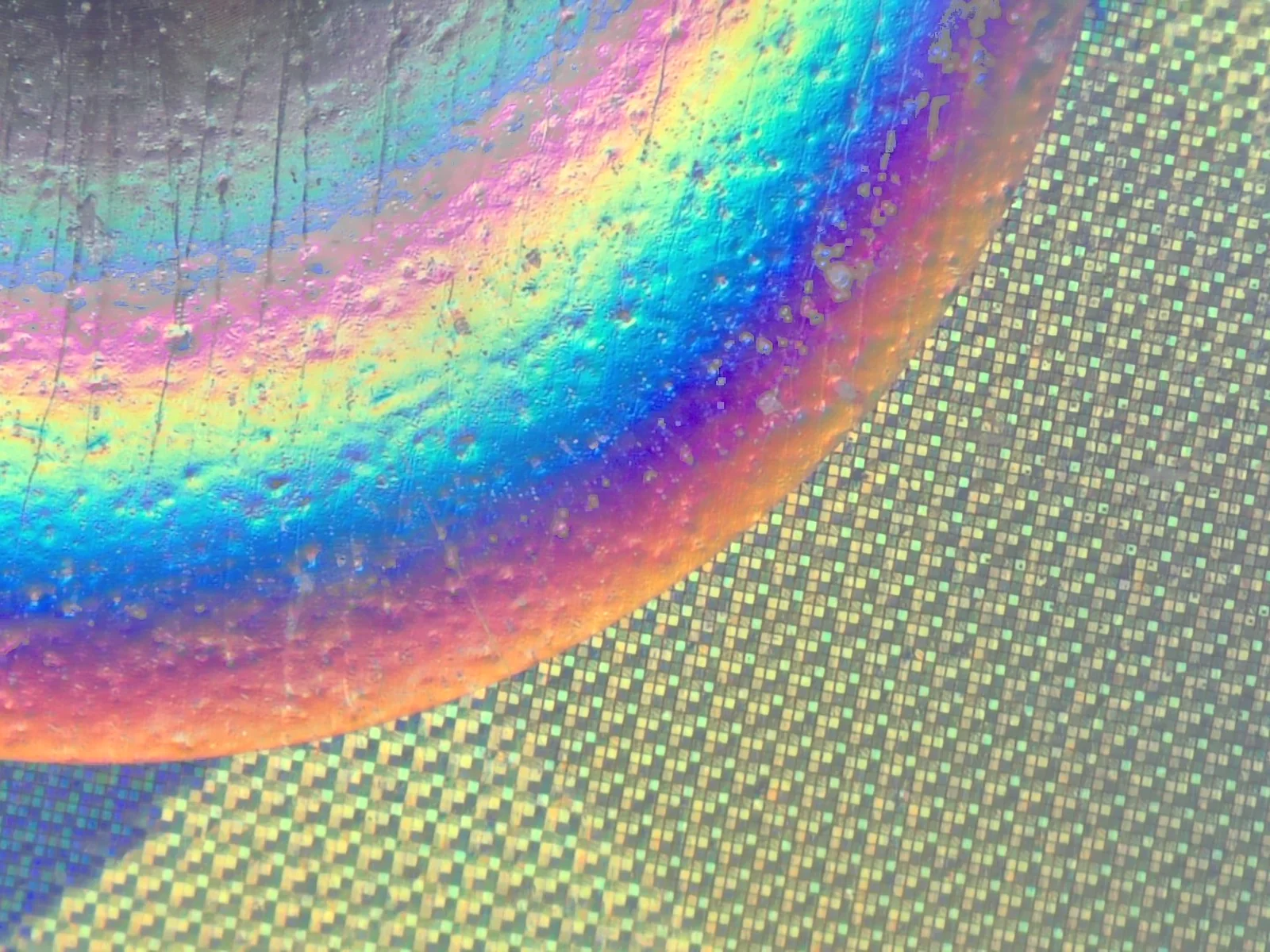
01Why a hologram disappears in a photo
Holograms and OVI work through the interaction of light and microstructure. A camera records brightness and colour at one fixed angle; the real image appears only when the angle changes. That is why a hologram often looks like a grey or rainbow patch in a phone photo.
This is not a design failure. The feature is working. The problem is a verification process that relies on a photo instead of the physical document.
02Where optical features belong
Optical features belong in the public visual check: no equipment, just a change of angle. They are excellent for quick screening, but should not be the only basis for a decision.
For higher-value documents we combine optics with intaglio, paper and digital trace. Even if someone captures a convincing photograph, touch, transmitted light and the serial provide independent confirmation.
“Optical security is not an image. It is evidence that appears only at the right angle.”
03Design for real light
Optical features must avoid the portrait, MRZ and critical text, and must be designed for how the document is actually viewed — in a bag, a wallet or strong sunlight. A hologram that looks beautiful in a lab but is always covered by a thumb in use is worth much less.
At proof stage, check the feature under natural light, indoor light and strong light. Never approve it from one ideal angle.
When approving an optical feature, put the camera down and check it with your eyes and hands.