TEC / 04

TECHNOLOGY / LAYERED DEFENCE

Layered security. Hard to imitate only when combined.

Paper, ink, optics and digital trace. Each solves a different problem. One layer alone is easy to imitate; layered security is a balance of cost and difficulty.

THE LAB

Take each layer apart.

Switch between these base layers. Each has a strength, a blind spot, and a natural place in the verification route.

Engraved pattern and security guilloche on paper
PAPER / 01Transmitted light / touch / UV

01 SECURITY PAPER

Security paper

Visible in transmission. Defeated by copying.

Watermarks and security threads are physical structures inside the sheet, not printed on it. They make a strong first visual check, but need the right viewing condition and light.

  • Two-level black and white watermarks
  • Embedded, windowed or segmented threads
  • Fluorescent fibres and anti-copy guilloche
  • Cotton or polycarbonate substrate
Verification
Transmitted light / touch / UV
Typical use
Book-format documents, certificates, fiscal paper, stamps

MICRO ARCHIVE

Magnify the detail and the evidence appears.

Six macro images from the process and print archive. Not renderings: traces left by paper, ink, print and optics.

Engraved pattern and security guilloche on paper 01 GUILLOCHE

Paper / Continuous line

Line width, density and registration set the first barrier to copying.

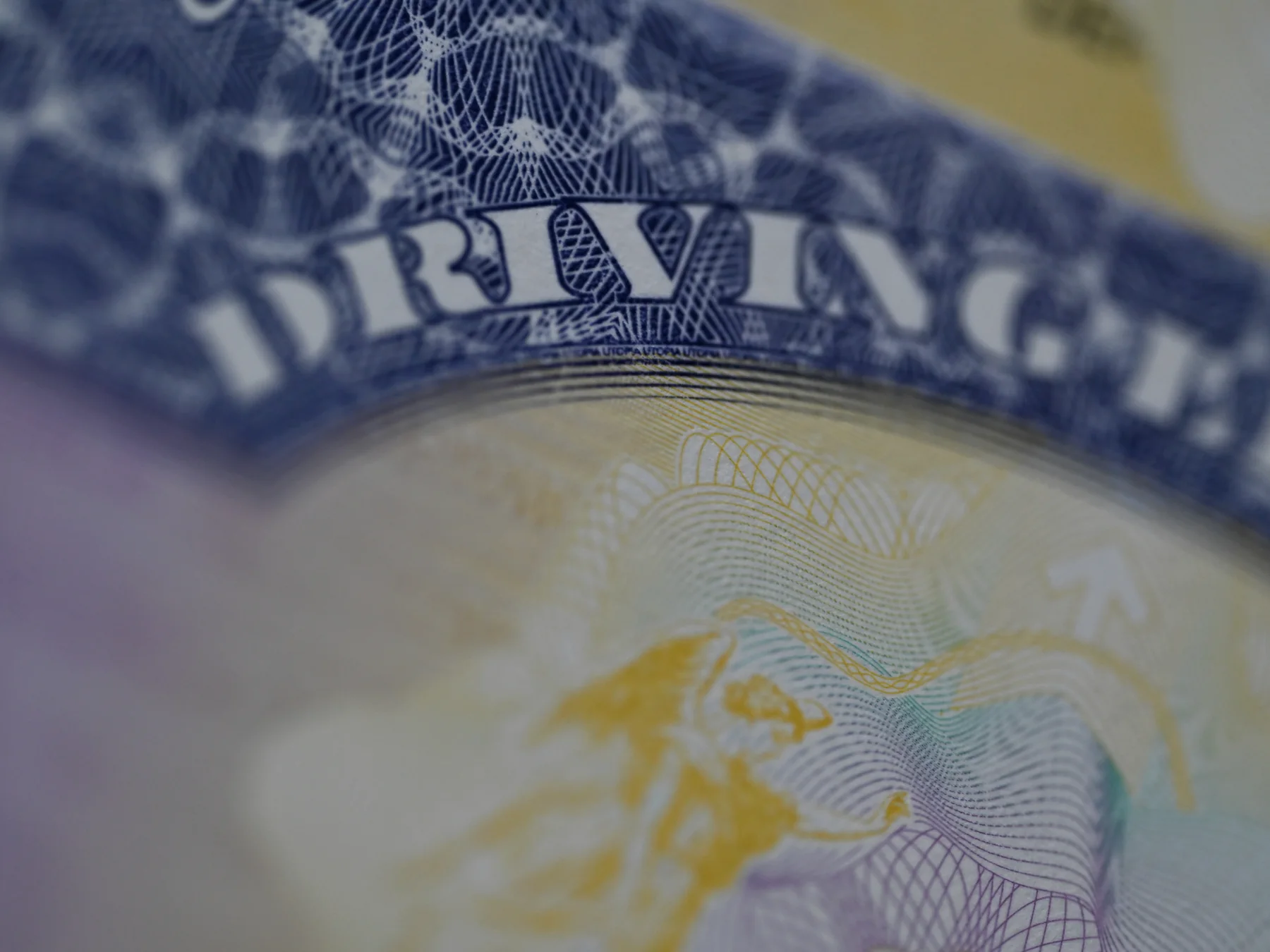
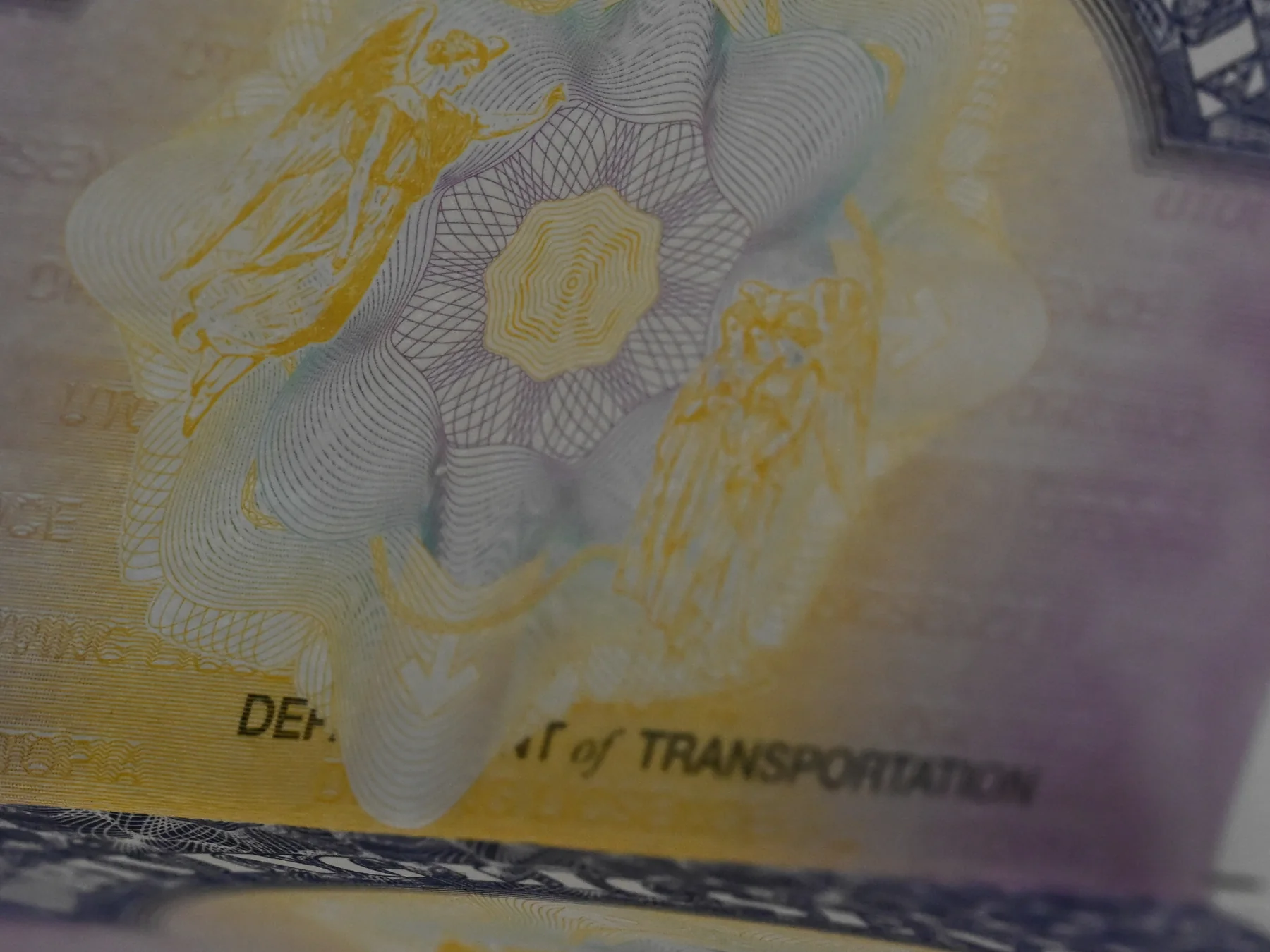
Intaglio linework and security guilloche on a document specimen 02 INTAGLIO

Intaglio / Continuous line

Line width, depth and registration set the continuity and feel of intaglio.

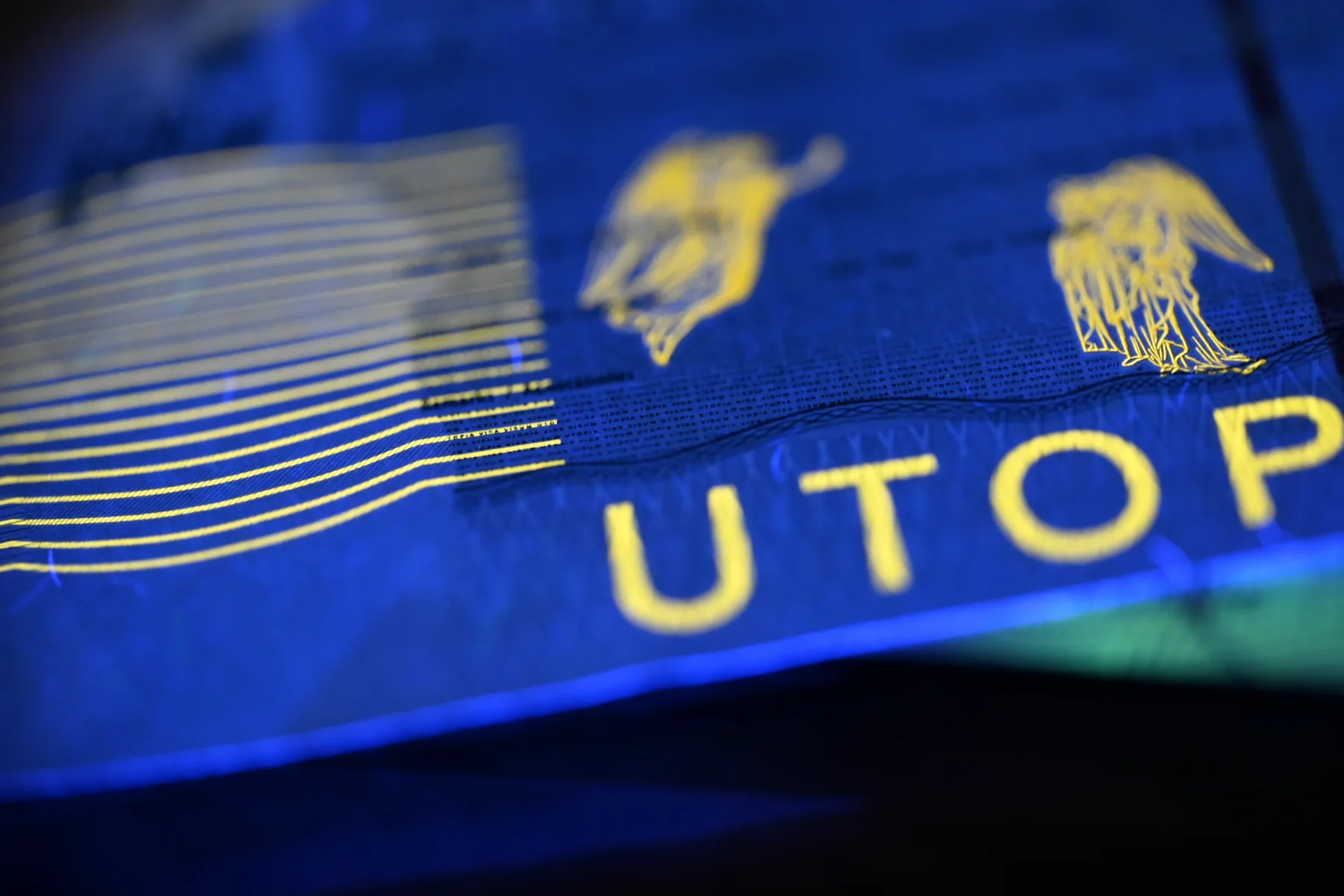
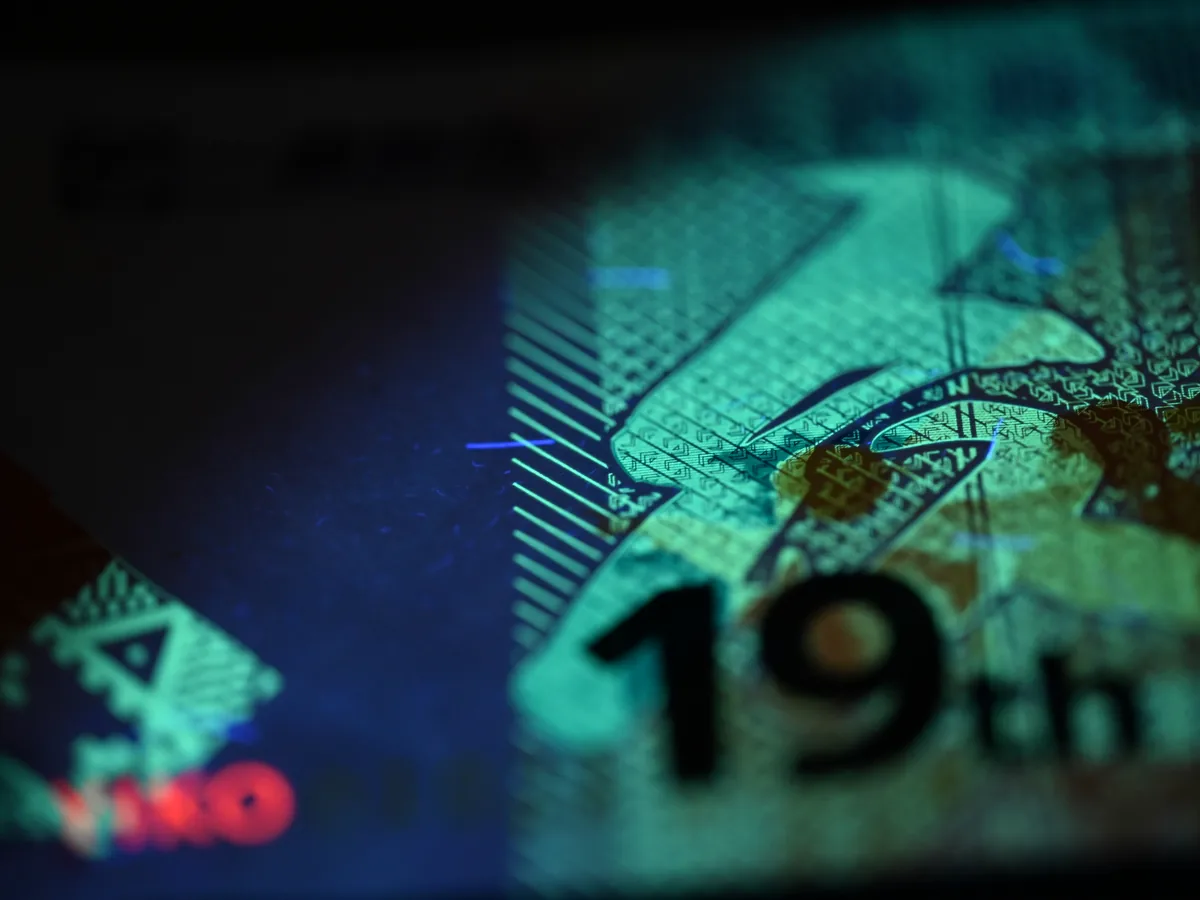
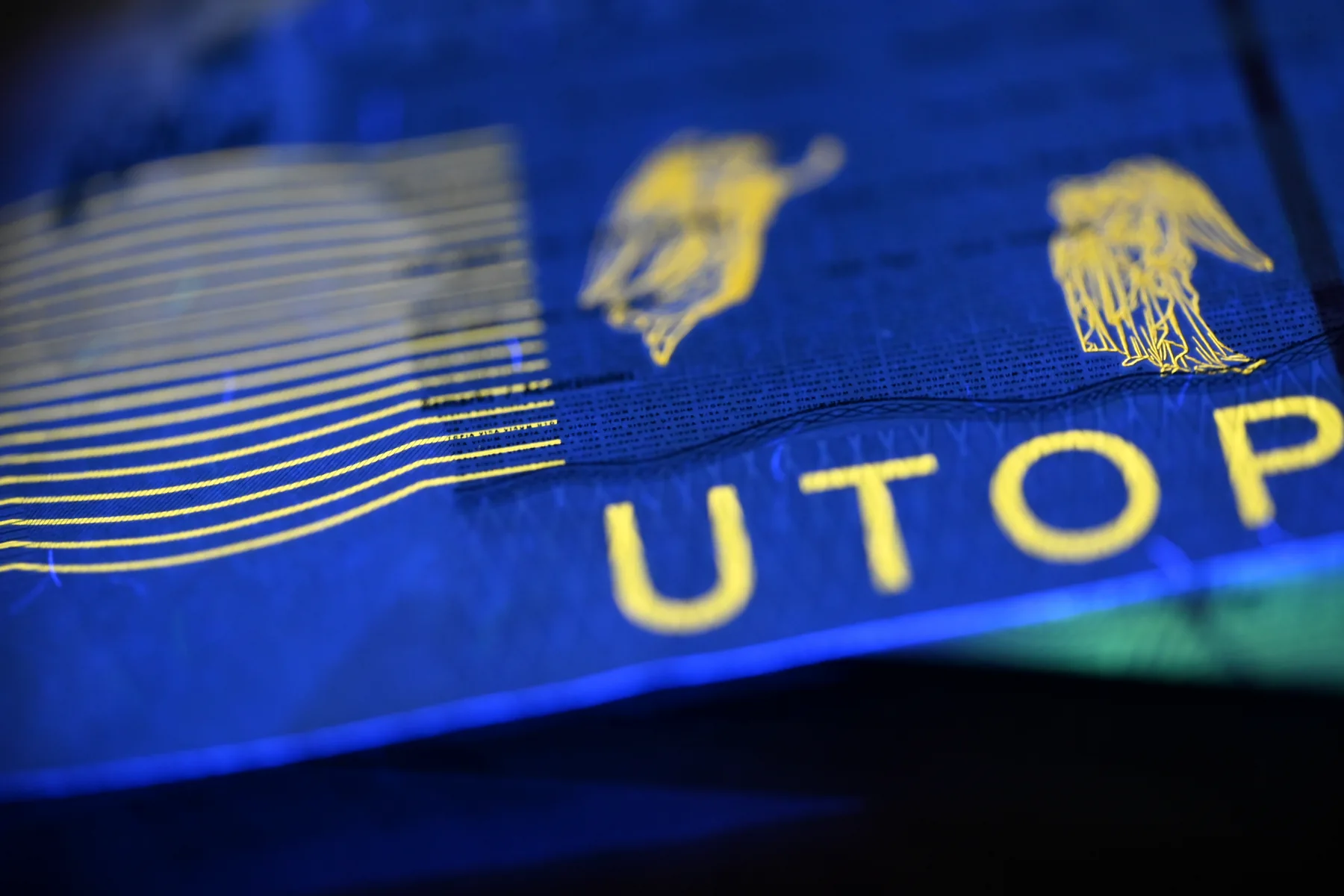
Fluorescent pattern revealed under UV light 03 ULTRAVIOLET

UV / Another kind of evidence

Almost invisible in normal light; it appears only under another source.

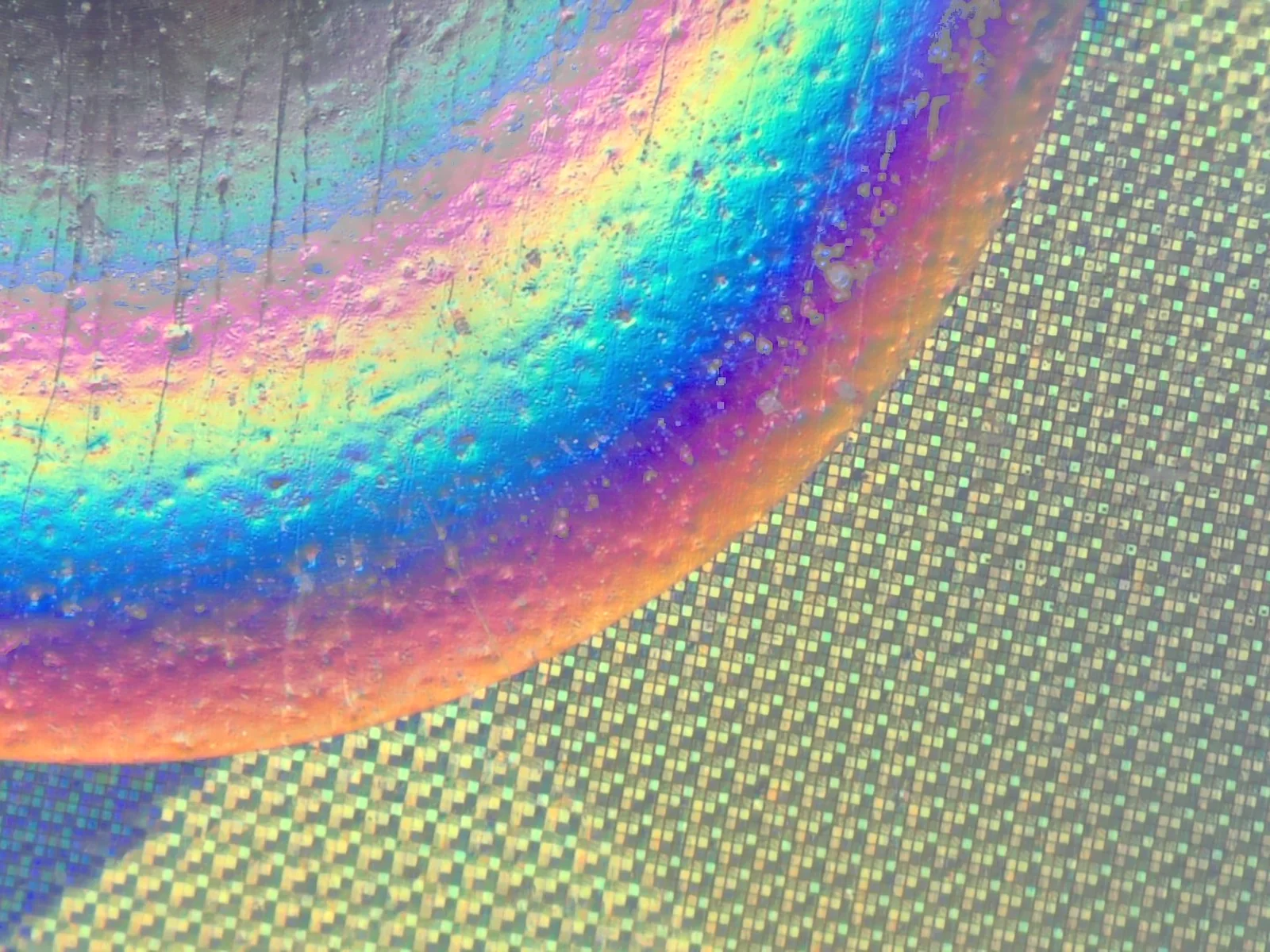
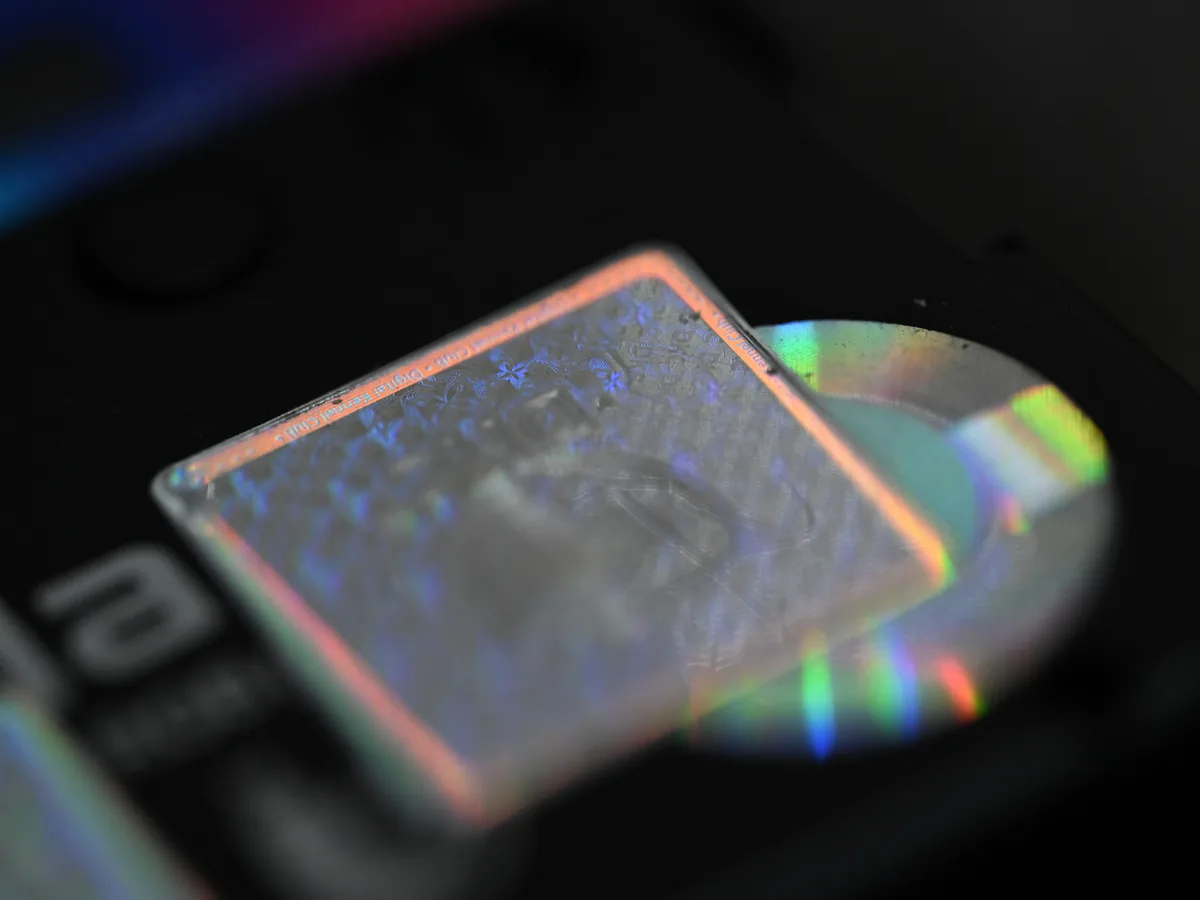
Registered holographic foil and diffraction 04 DOVID

Hologram / Angle

The image and colour resolve only when the angle changes.

Registration, numbering and linework detail on a printed sheet 05 PRINT

Print / Registration

Multi-stage registration and numbering aligned on the sheet.

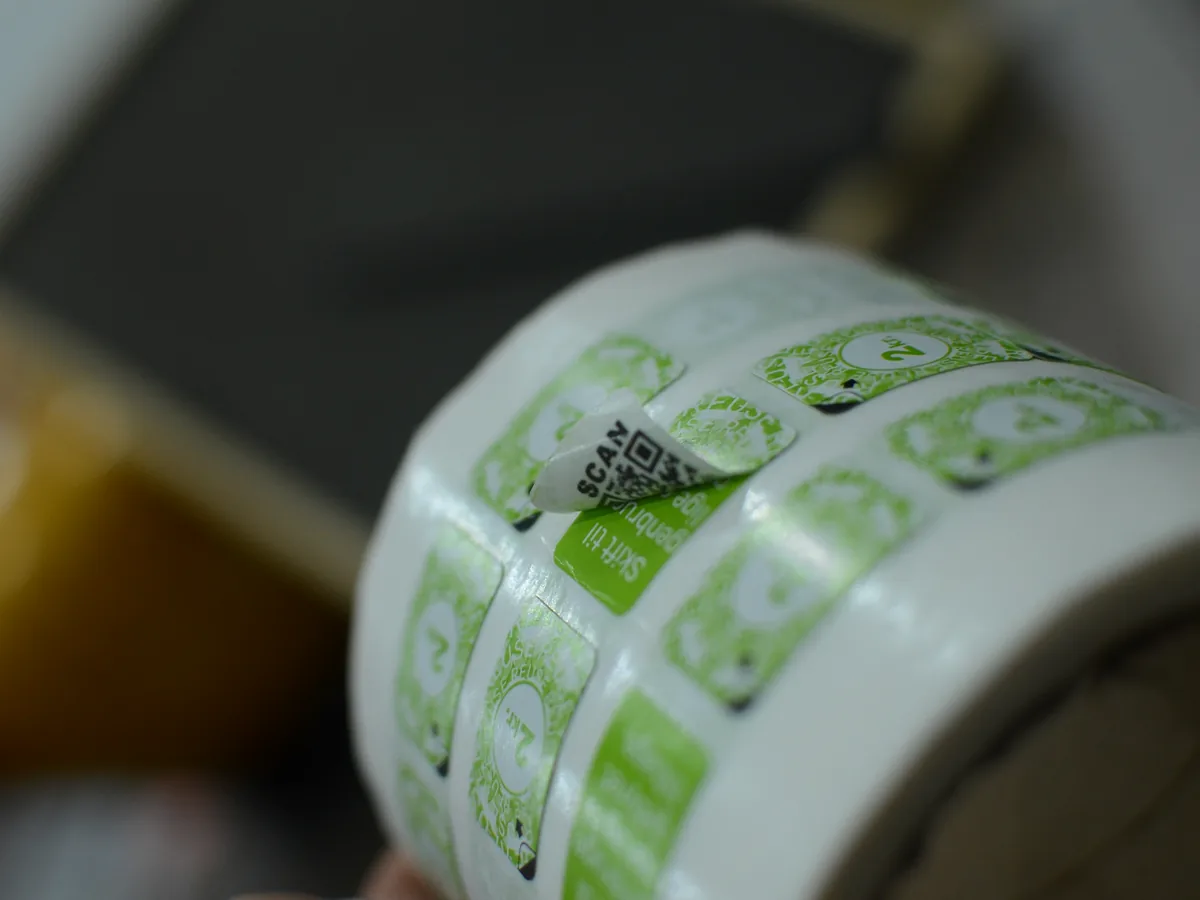
A roll of security labels 06 LABEL ROLL

Labels / Roll stock

From roll to single label, numbering and batch stay attached.

LIGHT TEST

Visible light shows the pattern. UV shows another layer of evidence.

A document specimen is a sheet of paper under visible light. Under UV, hidden fluorescent patterns, fibres and ink response appear. Verification design has to consider not only what can be printed, but under what light it will be seen.

UV is only one layer of confirmation. A real verification route still needs visual, tactile and serial checks to confirm one another.
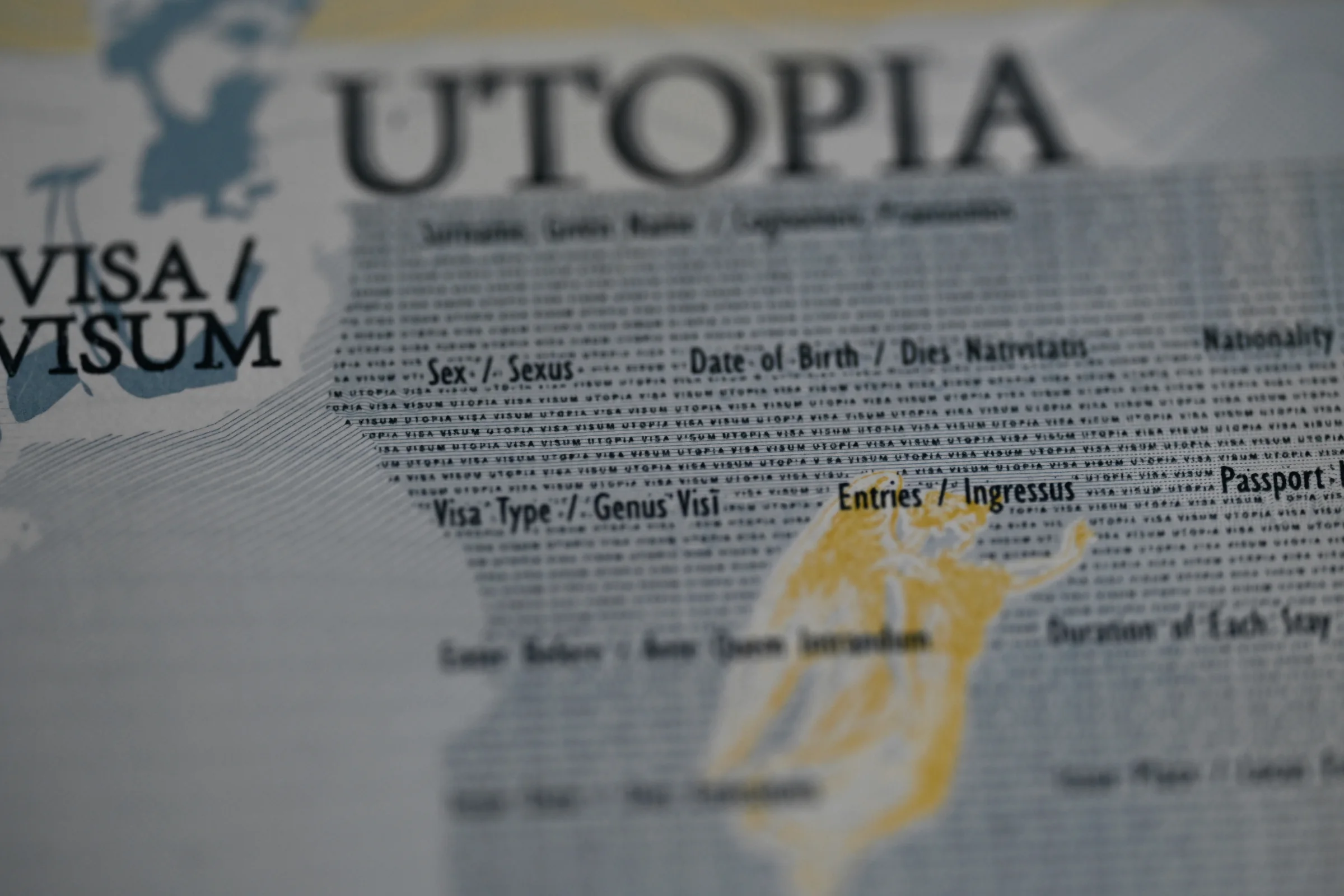
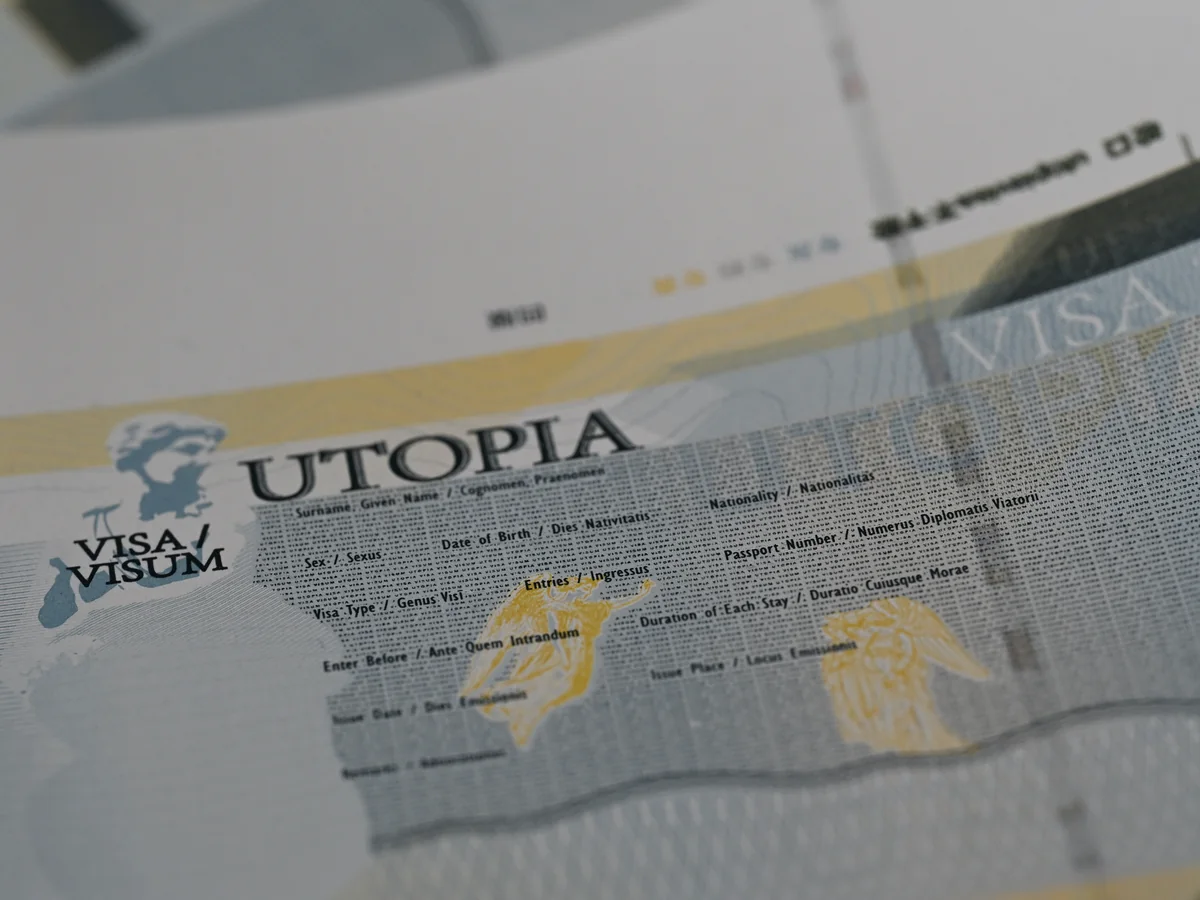
UTOPIA specimen / surface pattern and MRZ
VISIBLE / NATURAL LIGHT

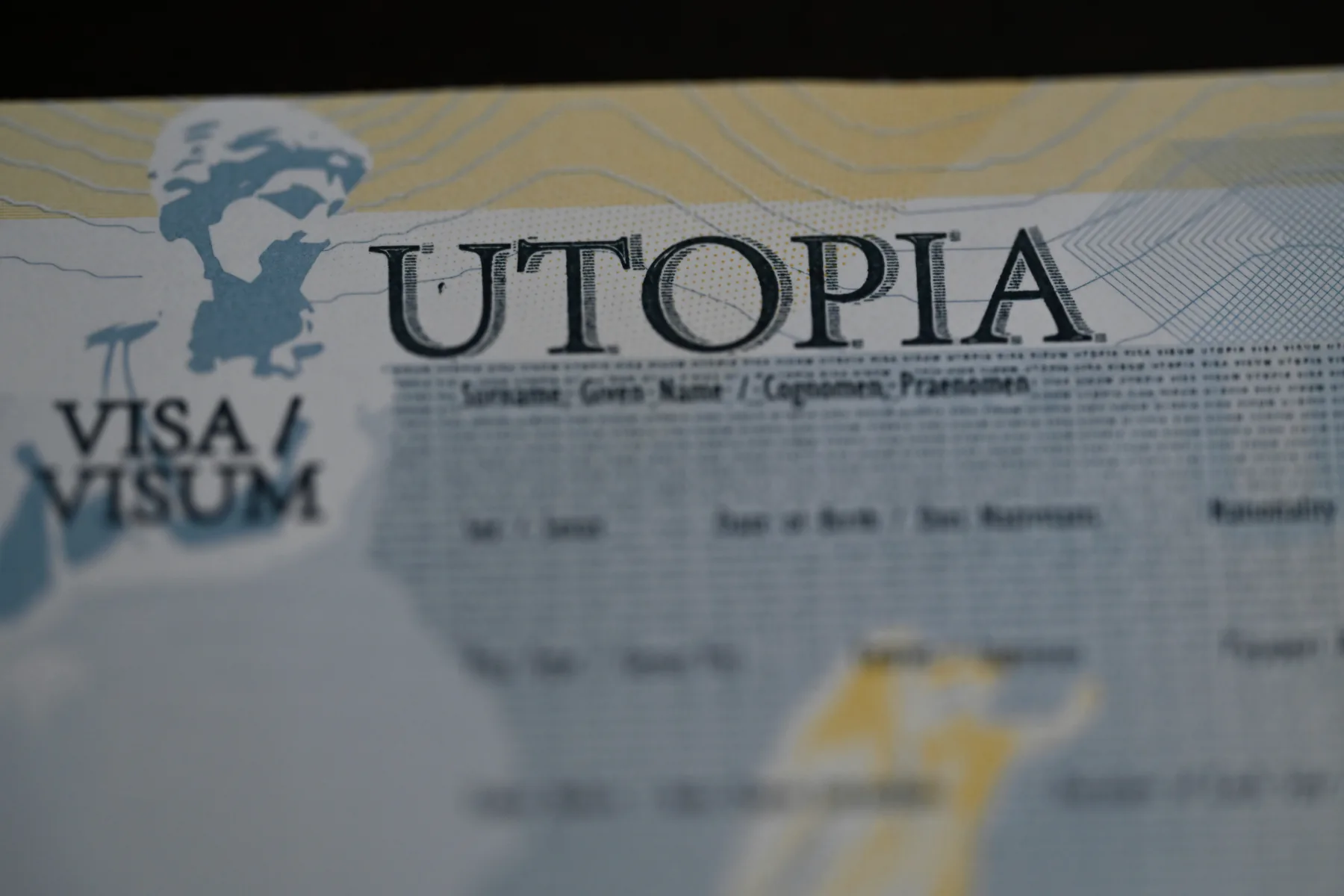
UTOPIA specimen / surface pattern and MRZ

Comparable specimen / fluorescence and ink response
UV / ULTRAVIOLET

Comparable specimen / fluorescence and ink response

MATRIX

One table for the cost of combination.

More is not automatically safer. Every layer adds cost and process. The comparison below is relative; each project needs its own assessment.

FeatureLayerMain verificationDifficultyRelative cost
WatermarkPaperTransmitted lightHighMedium
Security threadPaperLight / touchHighMedium
IntaglioInkLoupe / touchHighHigh
OVIInkAngleHighMedium-high
UV fluorescenceInkUV lampMediumLow
DOVID hologramOpticsAngleHighMedium-high
MicrotextOpticsLoupeMedium-highLow
Variable QRDigitalScanMediumLow
Serial rangeDigitalBackendMedium-highMedium

Difficulty and relative cost are qualitative comparisons, not a quotation or an absolute conclusion.

SELECTION

A few answers and the options converge.

There is no standard answer. Send the use case and verification route, and we will return a recommendation with the trade-offs stated.

I

Who verifies?

The public by eye, a clerk with a UV lamp, or a backend scan? The verifier changes the technical choice completely.

II

What are you defending against?

Photocopying, photography, resealing or internal serial leakage? The threat model decides how many layers are justified.

III

How long must it last?

A one-off voucher can be simpler. A long-circulation document must consider wear, light and re-verification.

FAQ

On feature combinations and verification.

These answers reflect common project experience. A live project is governed by its contract and inspection checklist.

01Does more security always mean safer?

No. Every feature adds cost, process and inspection burden, and may conflict with artwork or the MRZ. Define the threat model and verification route, then choose the smallest set that addresses the main risks.

02Can a hologram be the main security feature?

Not recommended alone. Holograms are good for public visual checks, but must be combined with other layers and controlled for sourcing and registration. Alone, they are too easily imitated at low cost.

03Is digital trace just a QR code?

A QR code is only the entrance. What matters is serial allocation, voiding and duplicate blocking, the definition of result states, and the exception process.

04Can you consult without taking the print?

Yes. We can start with material and process advice, samples and an inspection checklist, then decide whether to move into printing. Scope and deliverables are agreed first.

NEXT

A sample is worth more than ten pages of explanation.

Tell us the use case and verification method. We will send a set of material samples so you can test them by hand before deciding.