
01TRAVEL
Passports & travel documents
Ordinary and official passports, visa stickers and residence permits. MRZ, chip integration and binding sequence designed together.
SOLUTIONS / DOCUMENT SECURITY
For police, foreign affairs, education and fiscal issuing bodies: passports, visa stickers, diplomas and qualification certificates, fiscal documents and stamps. Design, platemaking, print, finishing and inspection run under one controlled process, with materials and serial ranges traced throughout.
Document security printing
Combinable security features
Material & process advice
ISSUERS
Not every document needs the most complex combination. Start with the issuer and the use case, then decide how many security layers are justified.
Ordinary and official passports, visa stickers and residence permits. MRZ, chip integration and binding sequence designed together.
Diplomas, degree certificates, professional qualifications and student records. Batch consistency and online verification are central.
Fiscal receipts, tax payment certificates and fixed-value invoices. Serial ranges, voiding and duplicate blocking must be traceable.
Commemorative and definitive stamps, postal stationery. Paper, perforation and gum stability come first.
PROCESS LAYERS
Each layer solves a specific problem, and leaves a different kind of evidence.
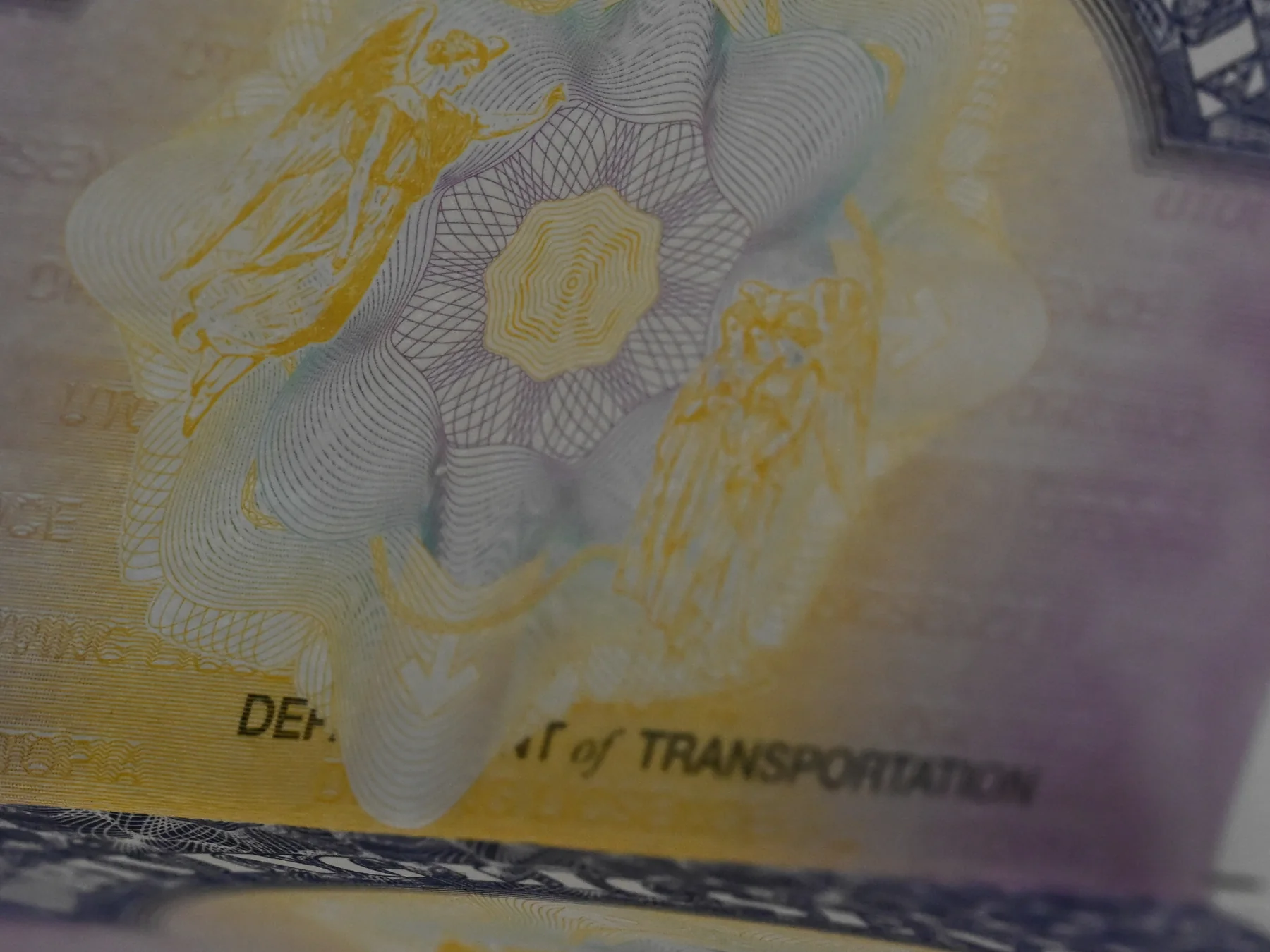
Paper and polycarbonate. Two foundations.
Cotton paper is used for book-format documents and stamps; polycarbonate for the data page of card-format documents. Printability, fold endurance and weathering determine how the security features combine.
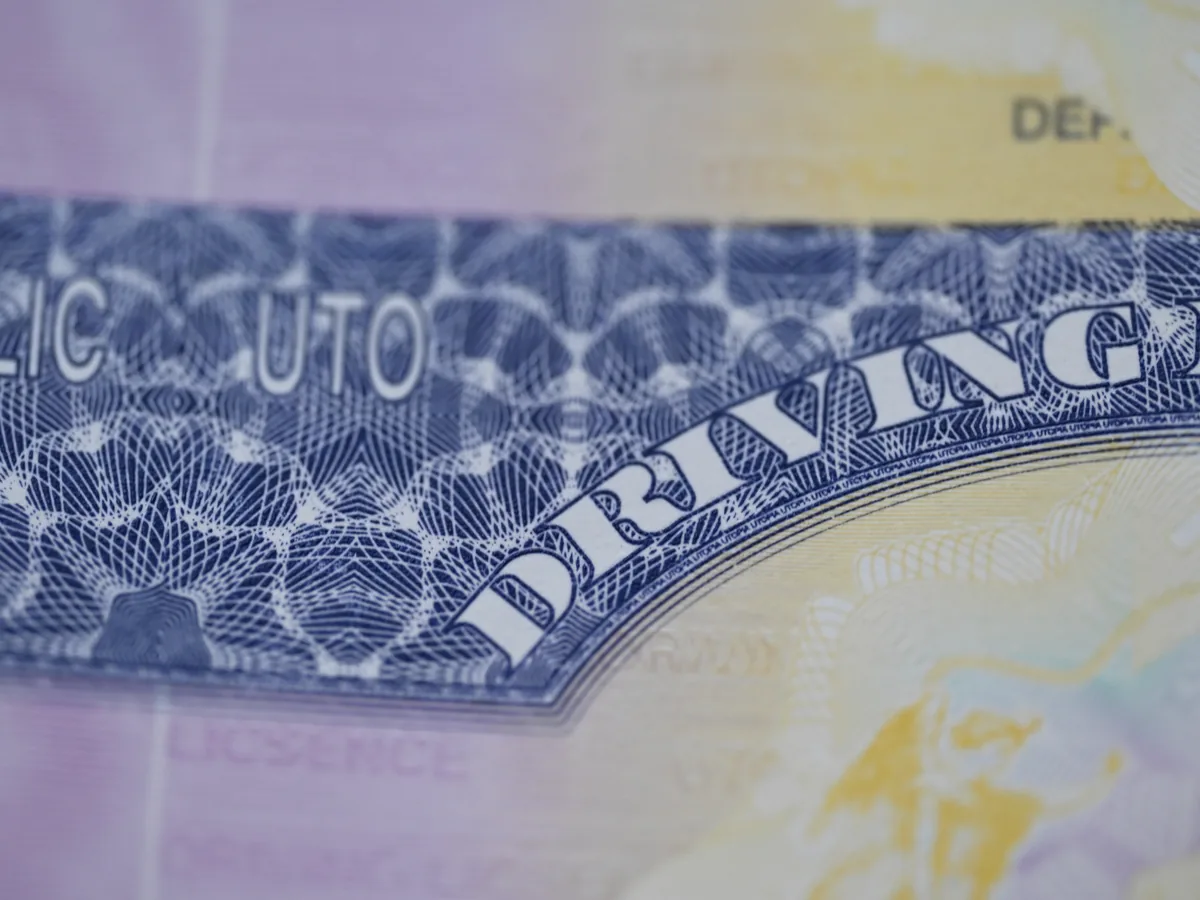
Continuous line structure is the first barrier to copying.
Engraved line width and depth together determine ink film. A registration error beyond 0.05mm shows up both under the fingertip and under a loupe.
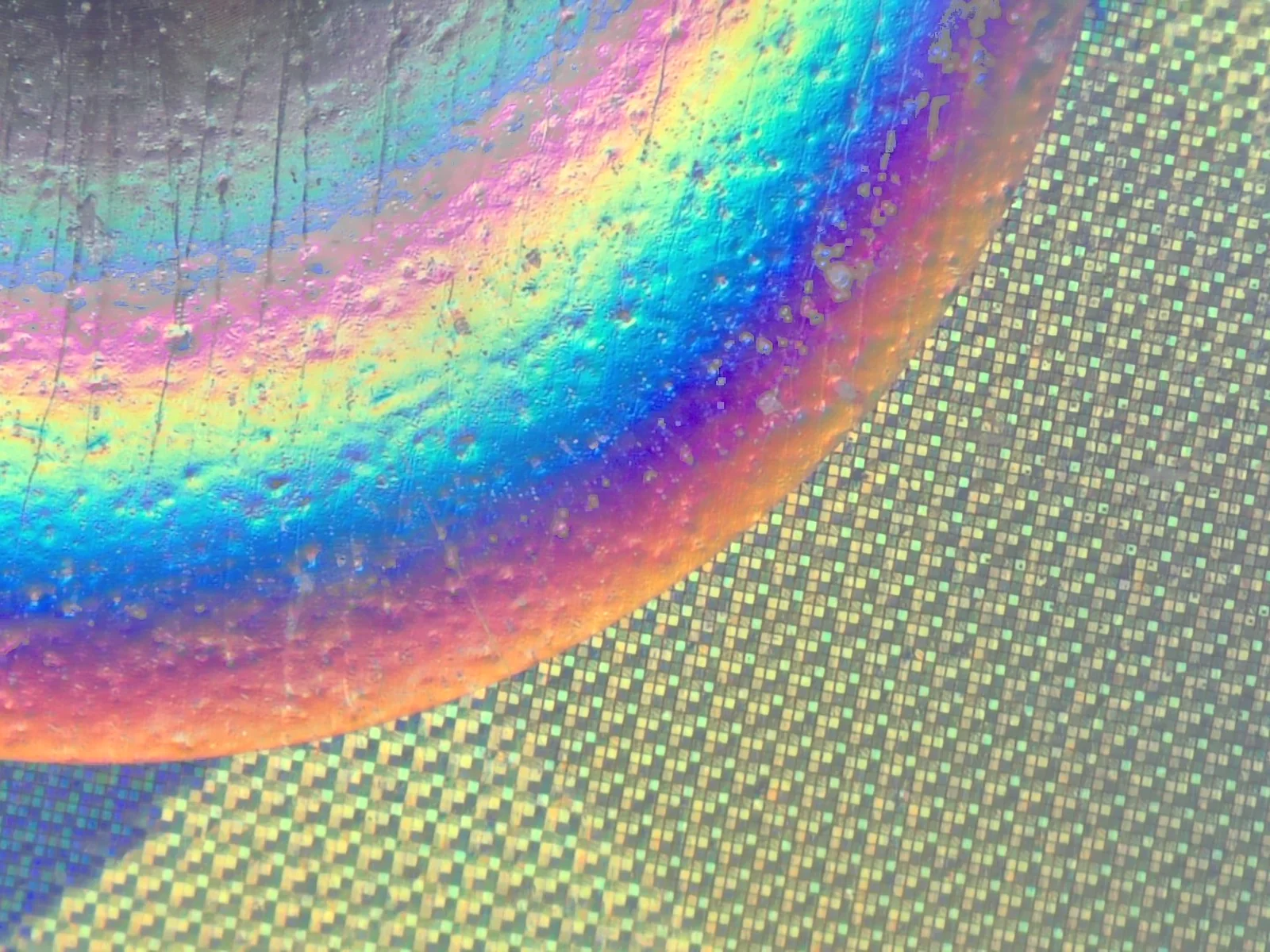
A feature that changes with angle is one of the most direct public checks.
OVI, DOVID and registered foil rely on angle-dependent effects that a person can read without equipment or training.
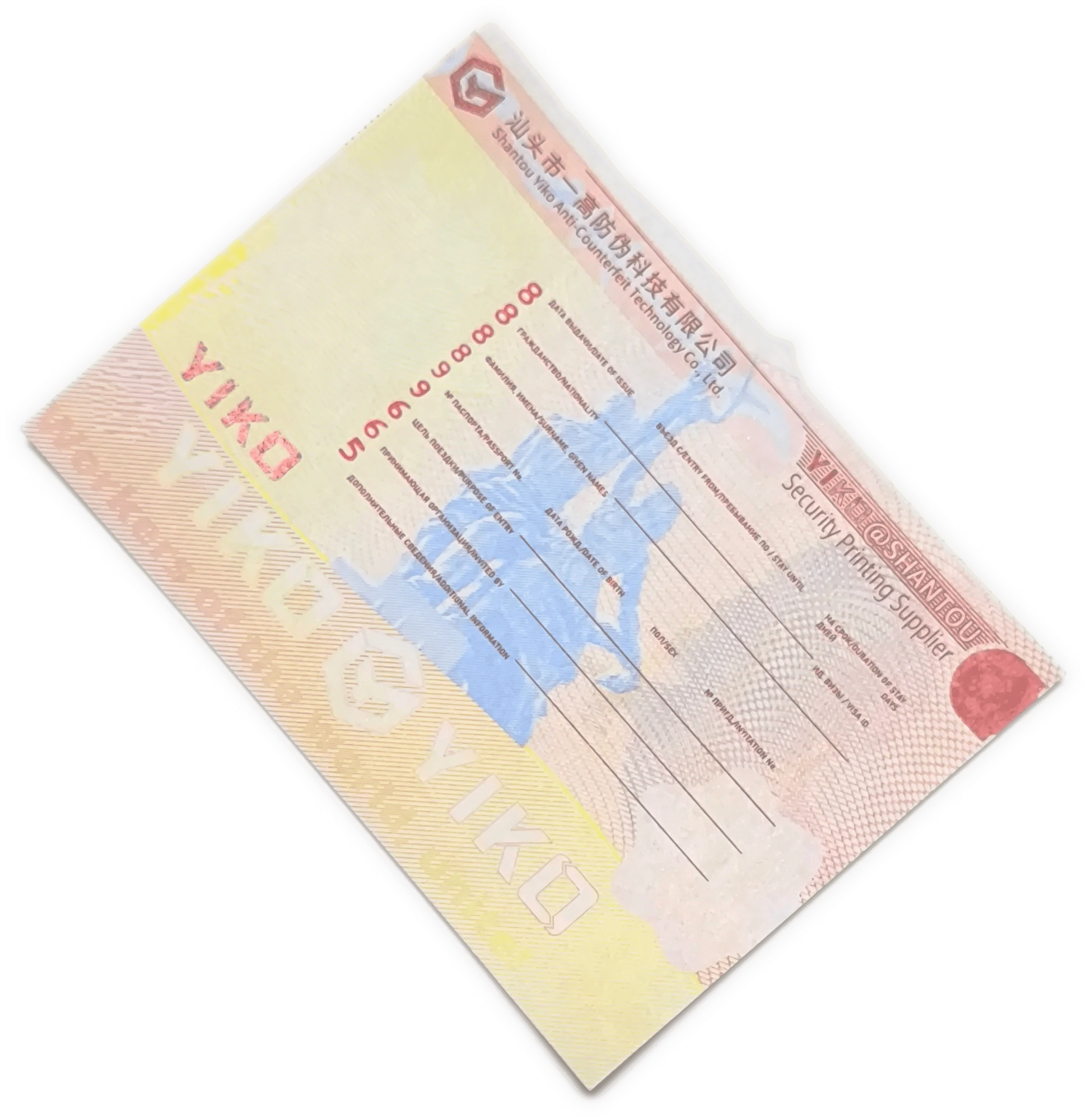
From the MRZ to the serial range.
Passport MRZs are generated and validated to ICAO Doc 9303; card formats follow ISO/IEC 7810 dimensions. Serial ranges, barcodes and verification APIs create the post-issue trace.
COMPLEX SECURITY DESIGN SOLUTION
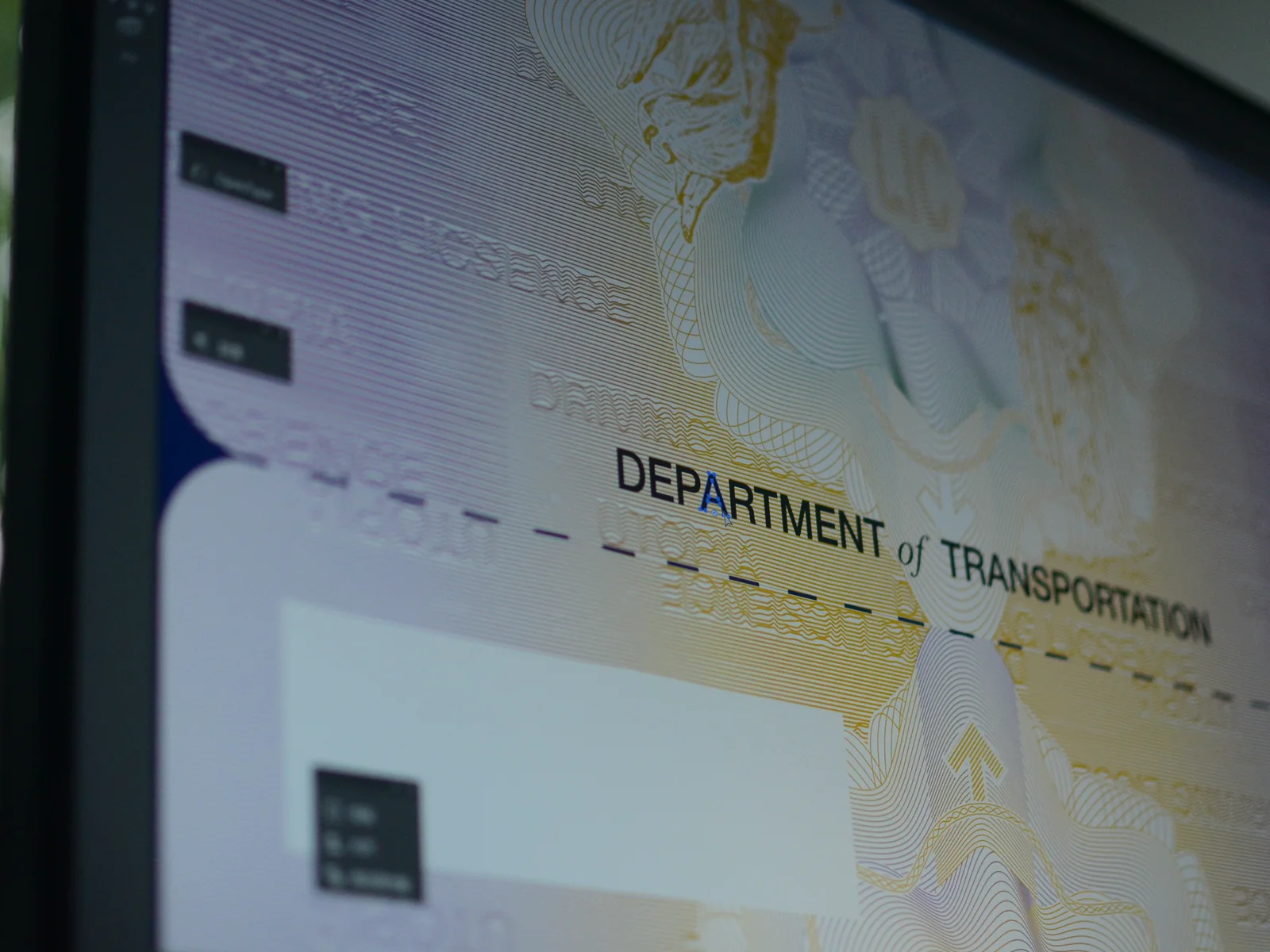
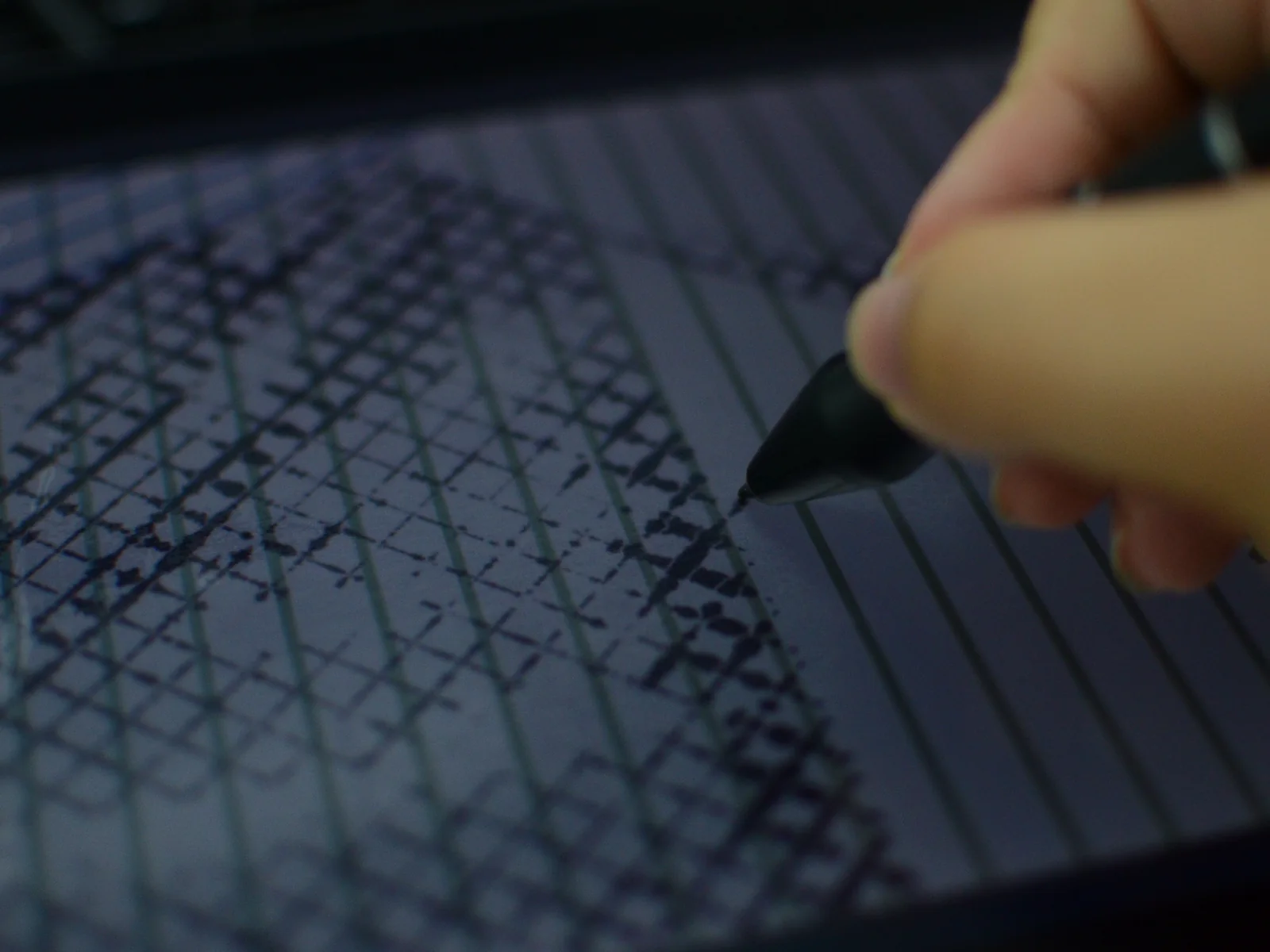
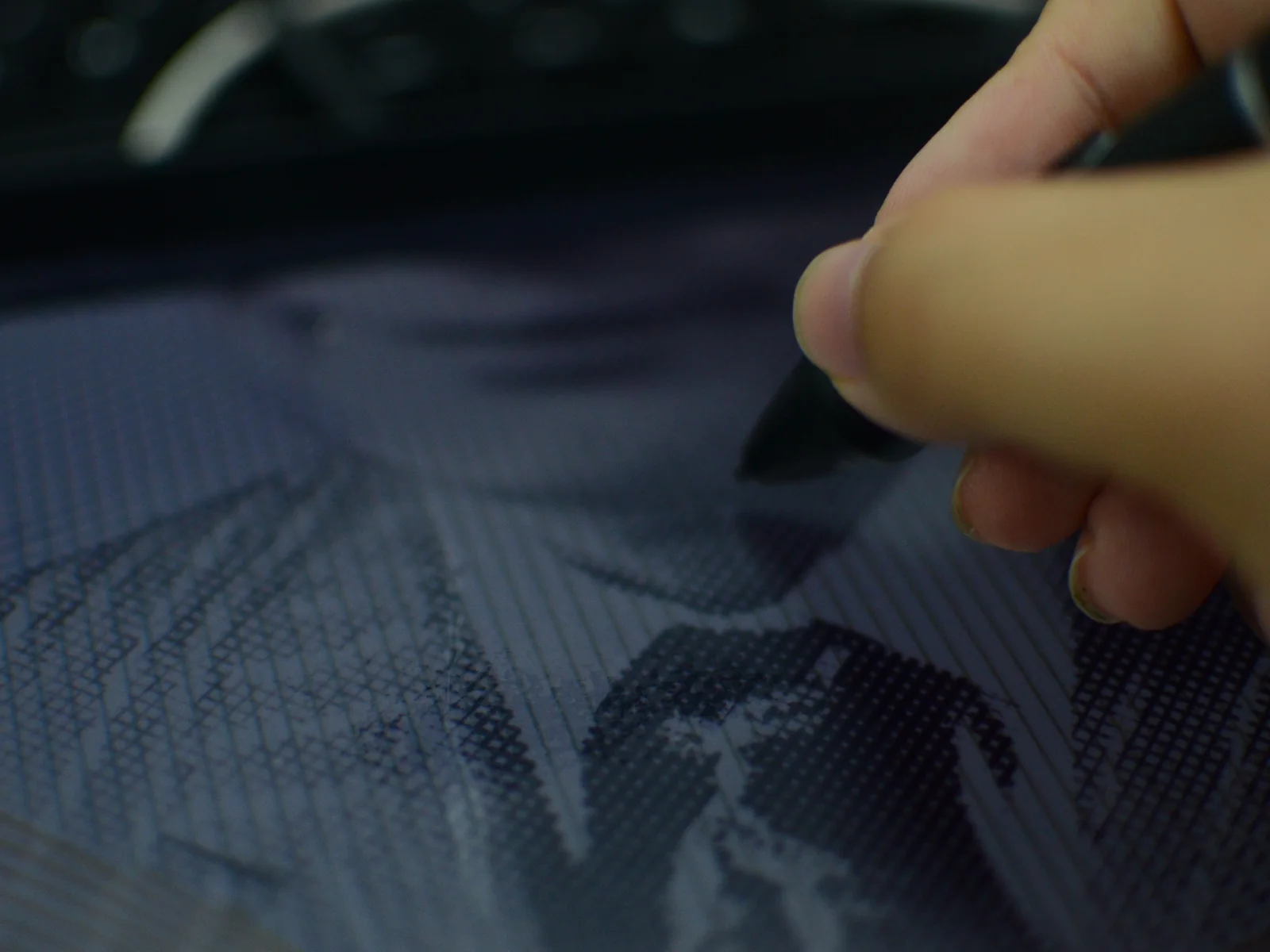
From layout and guilloche to numbering rules, design has to be settled together with substrate, process and verification. These three images document the design stage — not proofing, not inspection.
 01
Layout, type and guilloche are adjusted on screen, round by round.
 02
Density and joins of continuous linework are corrected on the sheet.
 03
Details to change are marked on the sheet before returning to the file.
DELIVERY
Every stage has a written confirmation: specification, proof, first article, handover sheet. No sign-off, no next stage.
Confirm issuer, document type, MRZ and chip requirements. Lock substrate and security feature set.
Layout, guilloche and numbering rules. Produce a physical proof and sign off item by item.
Security paper, security inks and multi-stage printing in sequence. Materials traced; waste destroyed on site.
Batch sampling, serial registration and sealed handover. Inspection records and retention samples included.
FAQ
These answers reflect common project experience. A live project is governed by its contract and inspection checklist.
Yes. Once we understand the use case, verification method and approximate volume, we can send a set of substrate and process samples with a corresponding inspection checklist.
It depends on process and material. Document projects are usually planned by batch; certificates and fiscal paper can be assessed per project. When volume is very low, platemaking and spot-colour set-up dominate the cost, and we will say so directly.
Yes, but we will run a printability review first: conflicts between security features, minimum line widths, numbering rules, registration and finishing. Only then does the job go to platemaking.
20–35 working days after specification and proof approval. Chip integration, complex binding or special inspection can extend this. For graduation season and year-end fiscal work, start at least 90 days ahead.
NEXT
Send the document type, annual volume, issuing cycle and existing artwork. Within 48 hours you will receive a material and process recommendation, with a physical sample and inspection checklist available by courier.